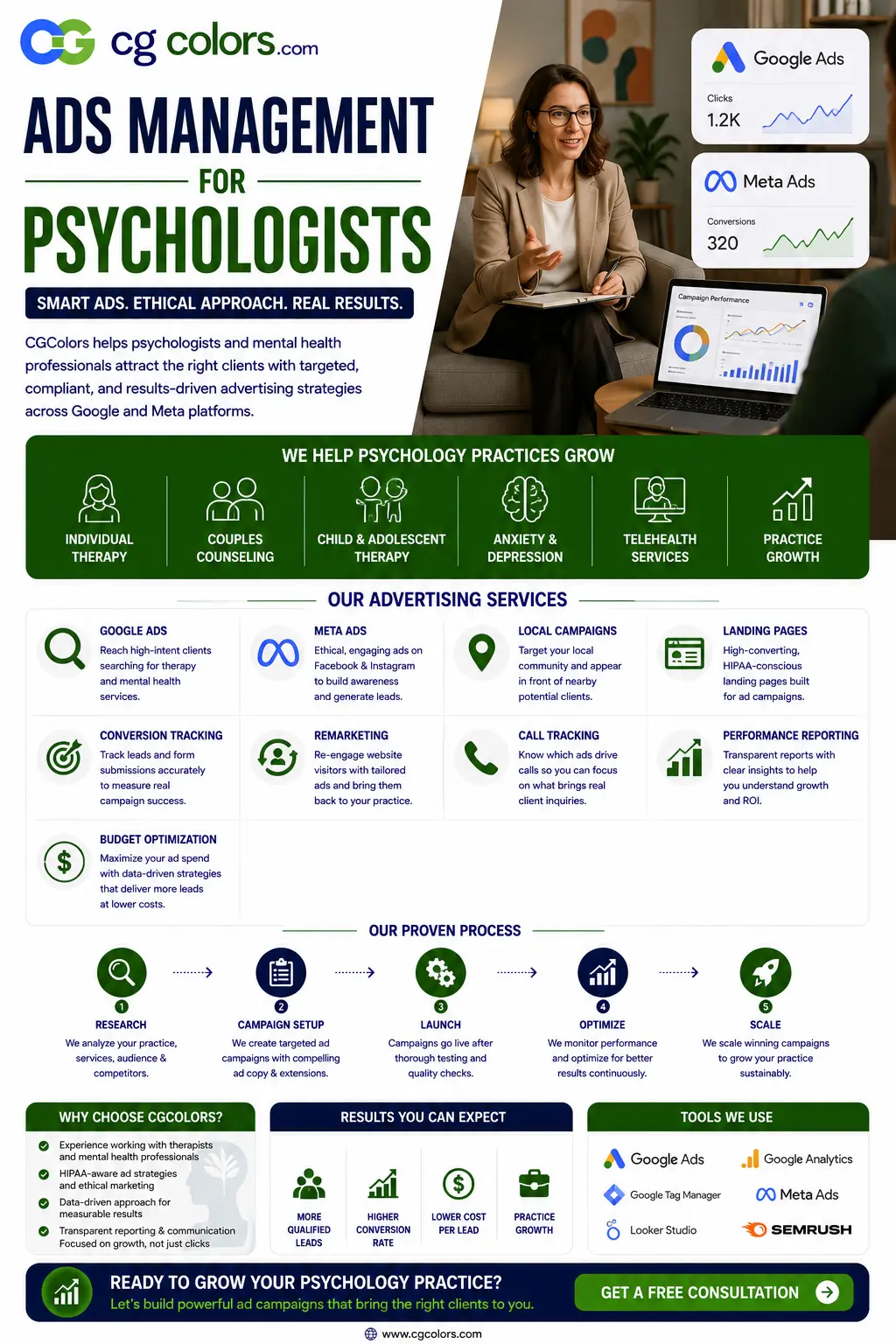
Ads Management for Psychologists

Fill Your Patient Calendar Without Compromising Compliance
  • HIPAA-aware campaign structure built specifically for private practice psychology
  • Campaigns separated by specialty, modality, and patient intake type
  • Tracking configured to capture consultation requests without exposing mental health data
  • Google Local Service Ads for verified psychologist placement
  • Ad copy that drives appointment intent without implying diagnosis or condition awareness
  • Monthly reporting tied to new patient inquiries and intake conversions
Call Us Now Schedule A Meeting

Need Help with Ads Management for Psychologists

Ads Management for Psychologists

Running Ads for a Psychology Practice Without HIPAA Awareness Is a Serious Risk.

Mental health data sits at the top of HIPAA’s most sensitive protected health information categories. The HHS Office for Civil Rights has specifically identified mental health conditions as a category warranting heightened protection, and recent enforcement actions have targeted healthcare organizations whose websites transmitted condition-related browsing data to third-party ad platforms through standard tracking pixels. For psychologists, this risk is not theoretical. A standard Google Ads or Meta Ads setup that tracks which service pages a visitor viewed, retargets visitors who browsed depression or anxiety service pages, or passes form data through unsecured channels can constitute a HIPAA violation before a single appointment is booked.

CGColors builds paid advertising programs for psychologists with compliance as the foundation. Campaign structure, conversion tracking, ad copy, landing page design, and retargeting configuration are all built to drive new patient inquiries without capturing or transmitting protected mental health information. Your practice fills its calendar with new patients without the legal exposure that comes from working with agencies that do not understand behavioral health advertising.

Why Psychology Advertising Requires a Completely Different Approach

General healthcare advertising restrictions apply to psychology, but the mental health category carries additional layers of platform-level and regulatory constraints that do not exist in other clinical specialties.

Meta removed detailed targeting options based on health conditions and mental health topics in 2022, fundamentally changing how psychology practices can use audience targeting on Facebook and Instagram. Campaigns that relied on condition-interest targeting no longer function as they previously did.

Standard Google remarketing that tracks which service pages a visitor viewed, such as a page discussing trauma therapy or eating disorder treatment, can qualify as a PHI disclosure even when no form is submitted and no name is collected.

Ad copy that implies awareness of a searcher’s mental health status, such as language suggesting the ad platform knows the recipient is experiencing anxiety or depression, violates both Google’s advertising policies and HIPAA’s minimum necessary standard.

LegitScript certification is required for certain behavioral health advertising categories including substance use treatment, and Google increasingly applies similar scrutiny to adjacent mental health advertising.

Psychology Today, BetterHelp, and Talkspace directories often appear in the same search results where your ads run, creating a competitive environment where ad spend competes directly against directory listings that rank organically for the same patient searches.

Why Choose CGColors for Your Psychology Practice Ads

  • Specialty and Modality Campaign Segmentation

    • Separate campaigns for each specialty: individual therapy, couples counseling, child and adolescent therapy, trauma treatment, group therapy, and psychological assessment
    • Modality-level segmentation for CBT, EMDR, DBT, and psychodynamic approaches where search volume supports it
    • Urgency-based separation between immediate intake searches and longer-cycle specialty consultation searches
    • Geographic targeting matched to your licensed practice locations and telehealth coverage states
  • HIPAA-Aware Tracking and Conversion Configuration

    • Conversion tracking measures form completions and calls without passing condition data or personally identifiable information to ad platforms
    • Tracking pixels excluded from all pages discussing diagnoses, symptoms, or treatment approaches
    • Call tracking connected to campaigns using compliant attribution methods that do not log protected caller health information
    • Intake form design reviewed to prevent sensitive clinical detail from transmitting through non-compliant channels
  • Compliant Ad Copy Strategy for Mental Health Providers

    • Headlines and descriptions target appointment and consultation intent without implying awareness of the searcher’s mental health condition
    • Copy built around provider credentials, availability, telehealth options, and clinical specialties rather than condition-specific language
    • Ad extensions configured for location, call buttons, service highlights, and licensed provider credentials within platform policy limits
    • All copy reviewed against Google’s healthcare and sensitive category advertising policies before going live
  • Google Local Service Ads for Verified Psychologists

    • LSA profile setup and license verification for psychologists qualifying under Google’s healthcare provider verification program
    • Google Screened badge positioning builds patient trust at the moment they are actively comparing providers
    • Pay-per-lead model managed to control new patient acquisition cost by specialty and intake type
    • LSA and standard search budgets coordinated to prevent impression overlap on the same provider searches
  • Telehealth and Out-of-State Patient Campaigns

    • Dedicated telehealth campaigns targeting patients searching for online psychology services in every state where you hold an active license
    • Keyword strategy covering telehealth-specific intent including online therapy, video sessions, and remote psychology services
    • Landing pages built around session format, state availability, and telehealth platform without collecting sensitive pre-intake clinical data
    • Multi-state geographic targeting coordinated with your licensure map so spend only reaches patients you are authorized to serve

What’s Included

🔑
Campaign Setup and Strategy

Specialty-specific campaign separation for each clinical service your practice offers
HIPAA-aware campaign structure with compliant conversion tracking configuration
Google LSA profile setup with verified psychologist credentials and service area
Negative keyword lists blocking insurance billing, academic, and self-diagnosis searches
Telehealth campaign structure built per licensed state

🏢
Ad Creative and Extensions

Responsive search ads per specialty with compliant patient messaging and no condition implications
Ad copy built around credentials, availability, insurance, and telehealth access
Ad extensions including call, location, sitelink, and structured snippet assets
LSA profile setup with verified license credentials, specialties, and service area configuration

📍
Bidding and Budget Management

Maximize Conversions bidding for immediate new patient intake campaigns
Target CPA bidding for specialty and long-cycle patient research campaigns
LSA pay-per-lead budget management by specialty and intake type
Telehealth campaign budget allocated separately from in-office location campaigns

⚙️
Tracking and Reporting

New patient call tracking per specialty and campaign
Intake form submissions tracked per campaign without PHI transmission
Google Analytics 4 with compliant conversion goals per clinical campaign type
Monthly report: cost per new patient inquiry, cost per booked intake appointment, and campaign ROAS by specialty

✍️
Platform Coverage

Google Search Ads
Google Local Service Ads
Microsoft Bing Ads
Meta Ads: Facebook and Instagram
Google Display retargeting with condition-page exclusions applied

Blogs

Read More
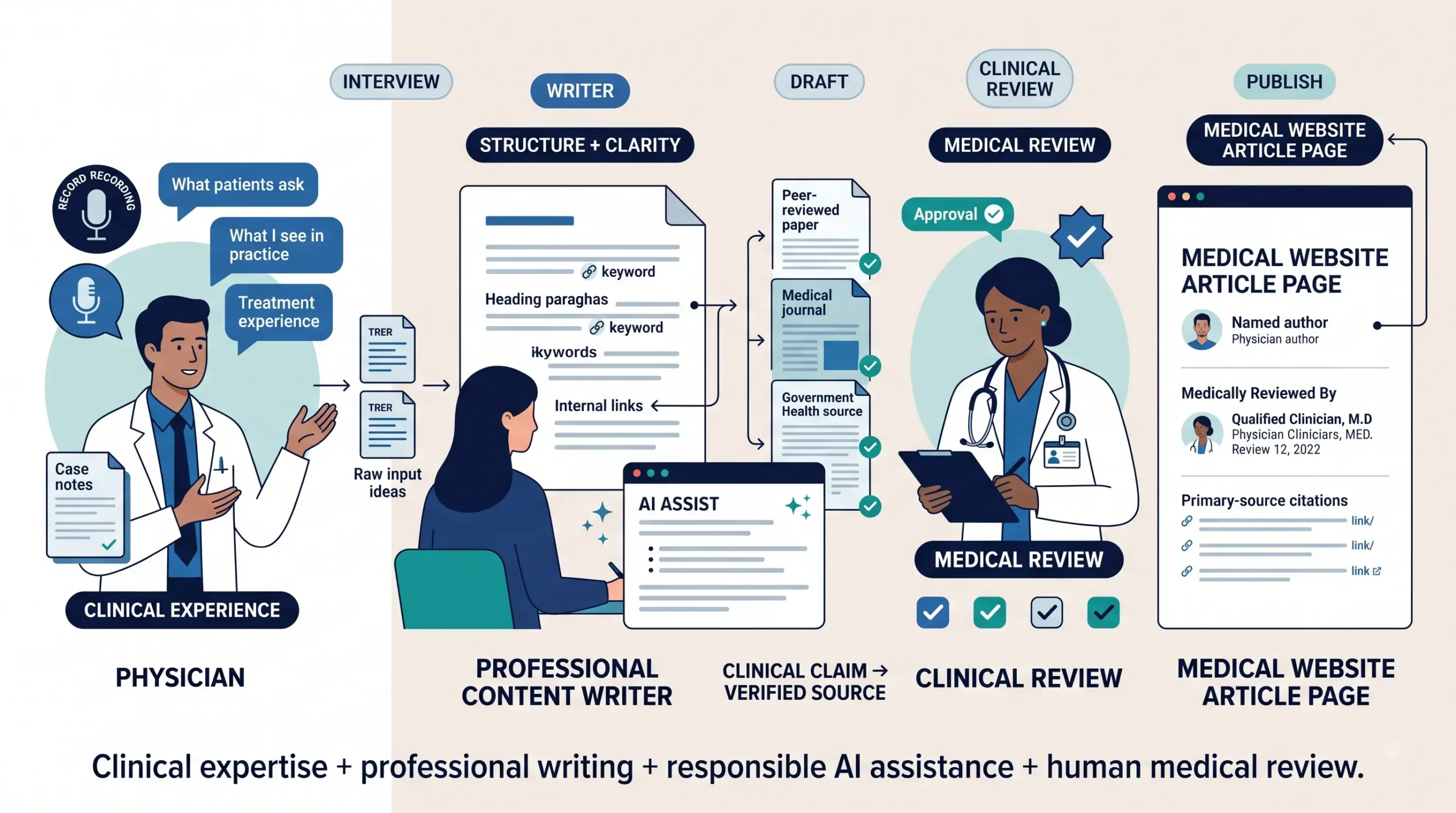
Who Should Write Your Medical Content: Doctors, Writers, or AI?
23 August, 2026

Who Should Write Your Medical Content: Doctors, Writers, or AI?

Every practice hits the same wall. The SEO plan calls for twenty pages of clinical content. The physicians who could write it authoritatively bill several hundred dollars an hour and have no free evenings. The writers who have time have never treated a patient. And the tool that produces a … Read More “Who Should Write Your Medical Content: Doctors, Writers, or AI?”

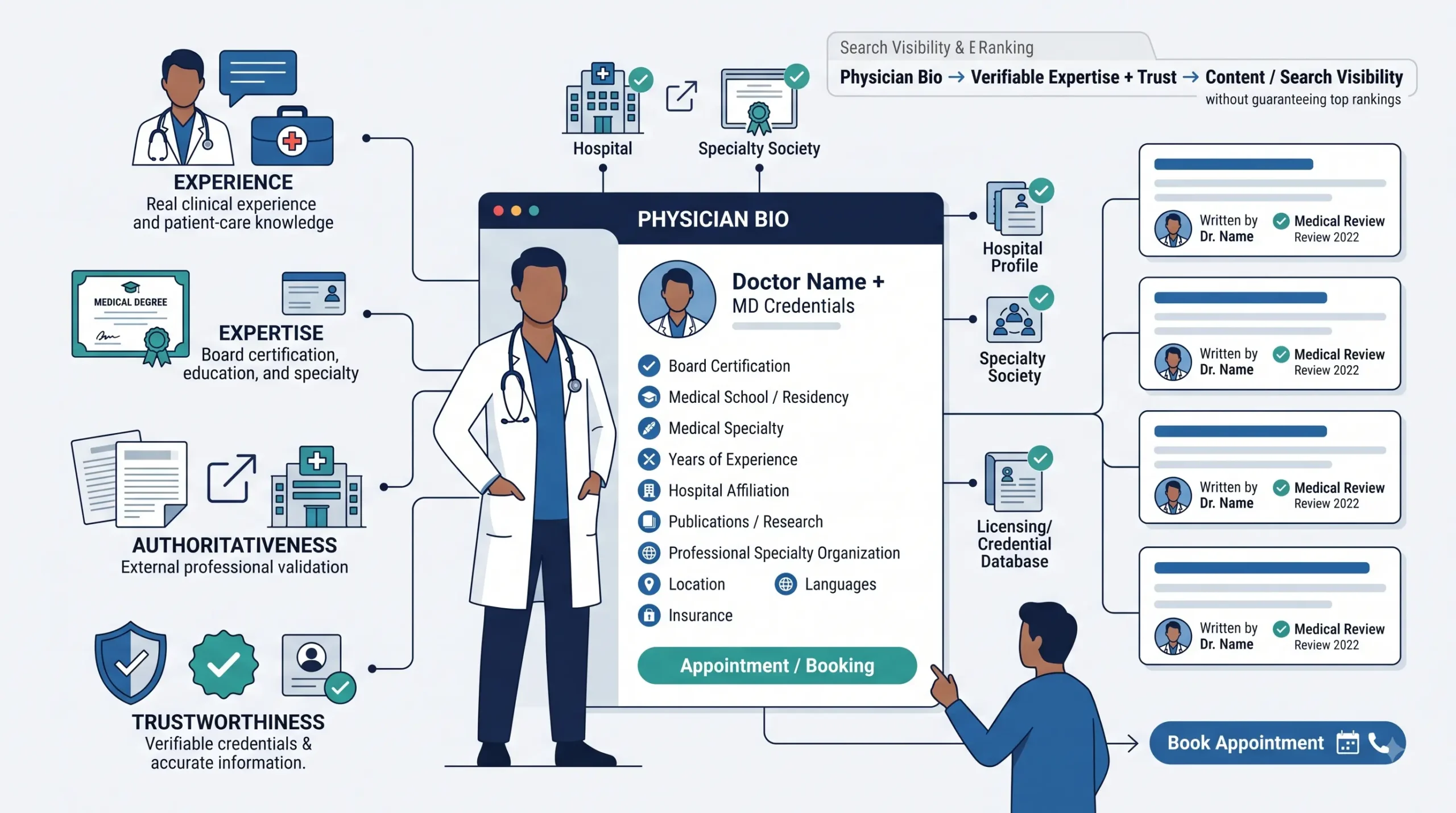
Physician Bios Are a Ranking Asset: Building E-E-A-T Signals Page by Page
21 August, 2026

Physician Bios Are a Ranking Asset: Building E-E-A-T Signals Page by Page

Most medical practice websites treat provider bios as an obligation. A headshot, three sentences about where the doctor went to school, maybe a line about enjoying hiking. Published once, never touched again.That page is doing two jobs badly. It is the page prospective patients visit most often before calling, and … Read More “Physician Bios Are a Ranking Asset: Building E-E-A-T Signals Page by Page”

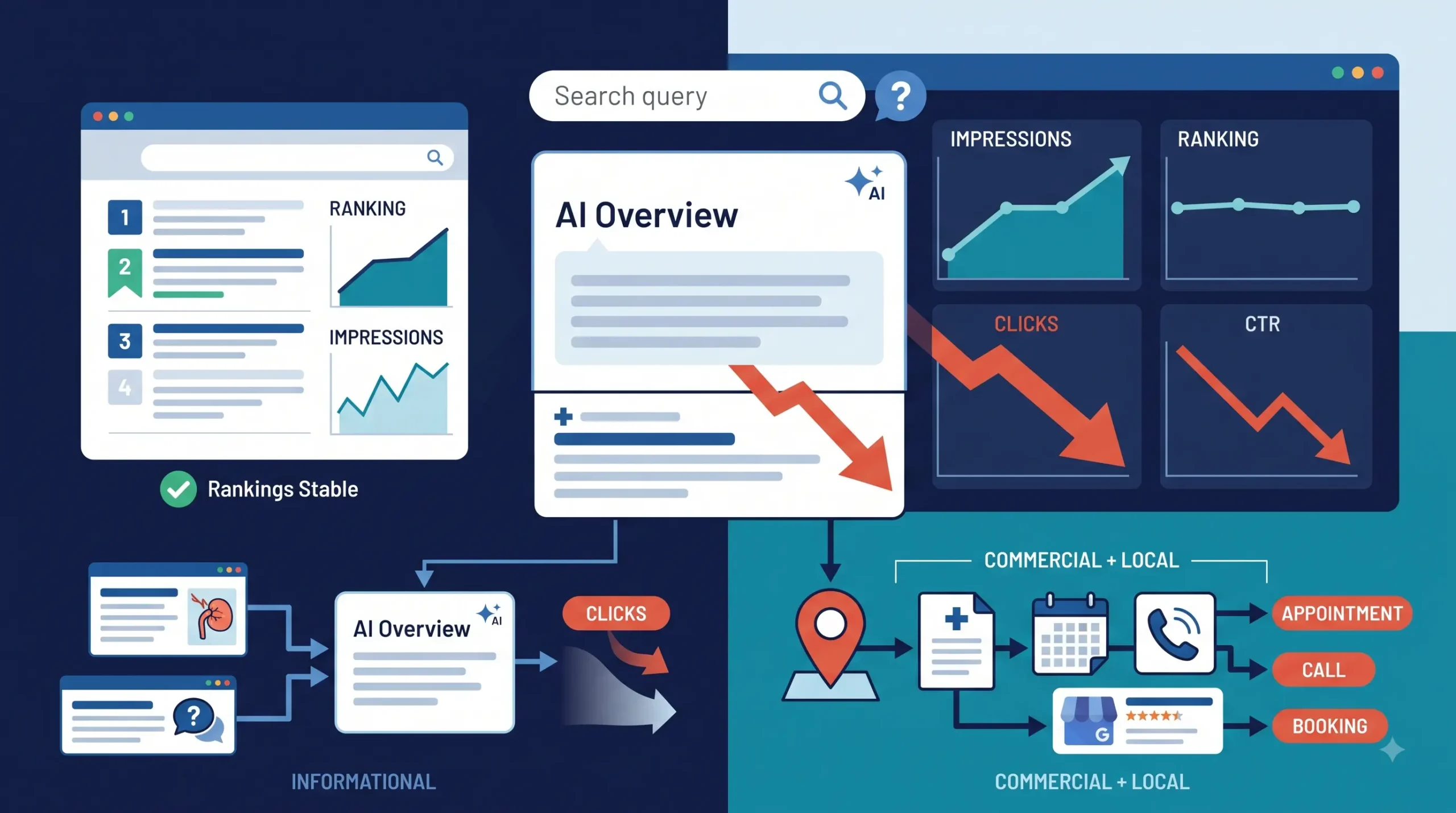
Traffic Dropped but Rankings Held: Diagnosing AI Overview Losses on a Medical Site
19 August, 2026

Traffic Dropped but Rankings Held: Diagnosing AI Overview Losses on a Medical Site

A practice calls its agency in a panic. Organic traffic is down forty percent. Something is broken. Fire someone.Then you open Search Console and the picture makes no sense. Impressions are up. Average position improved. The rankings did not move, or they got better. Only the clicks collapsed.That shape is … Read More “Traffic Dropped but Rankings Held: Diagnosing AI Overview Losses on a Medical Site”

Copyright @ 2017-2026 CGCOLORS, INC. . All Right Reserved.