Local SEO for Jewelry Stores: The Complete Guide for Shopify and WooCommerce Owners
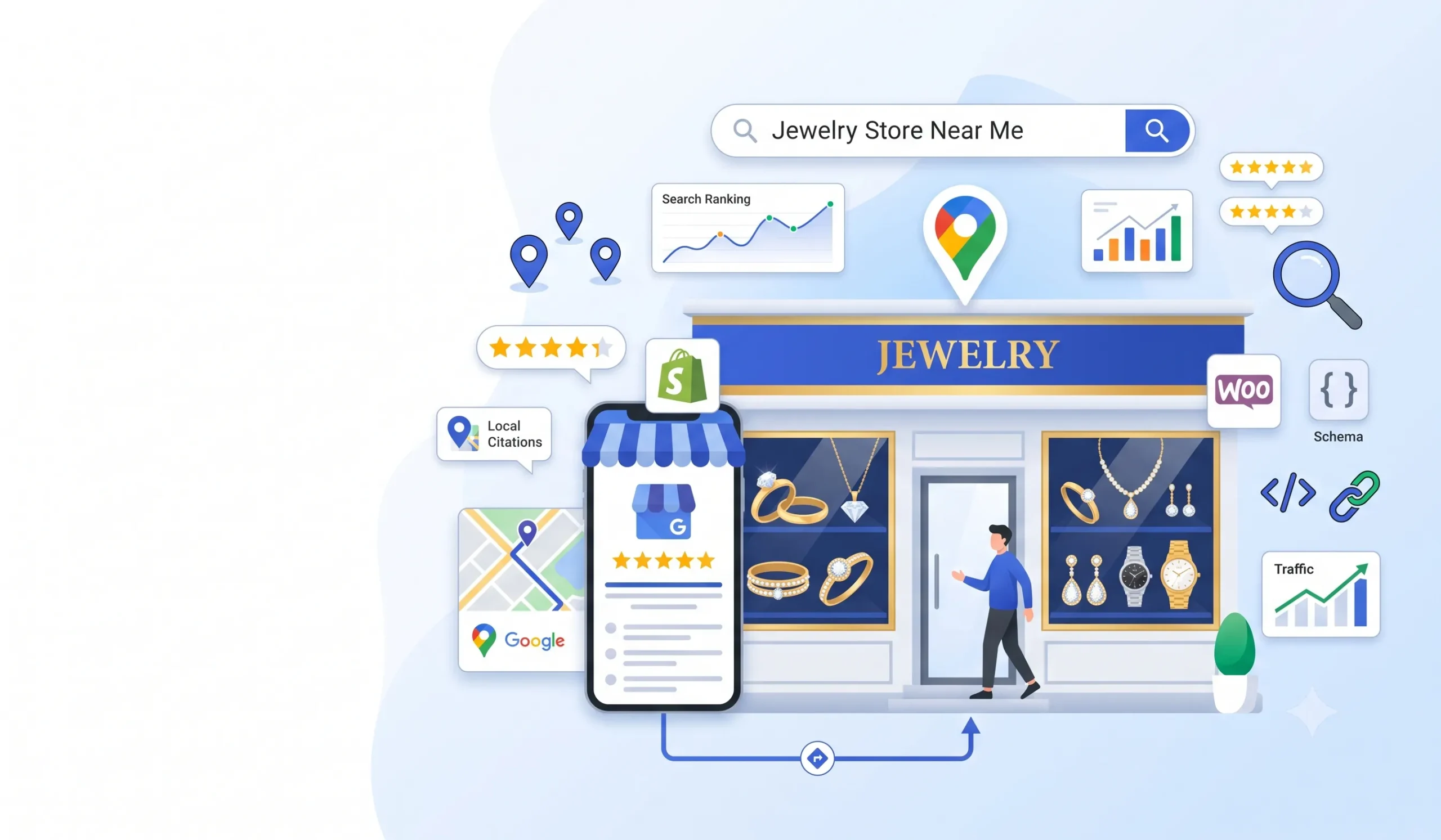
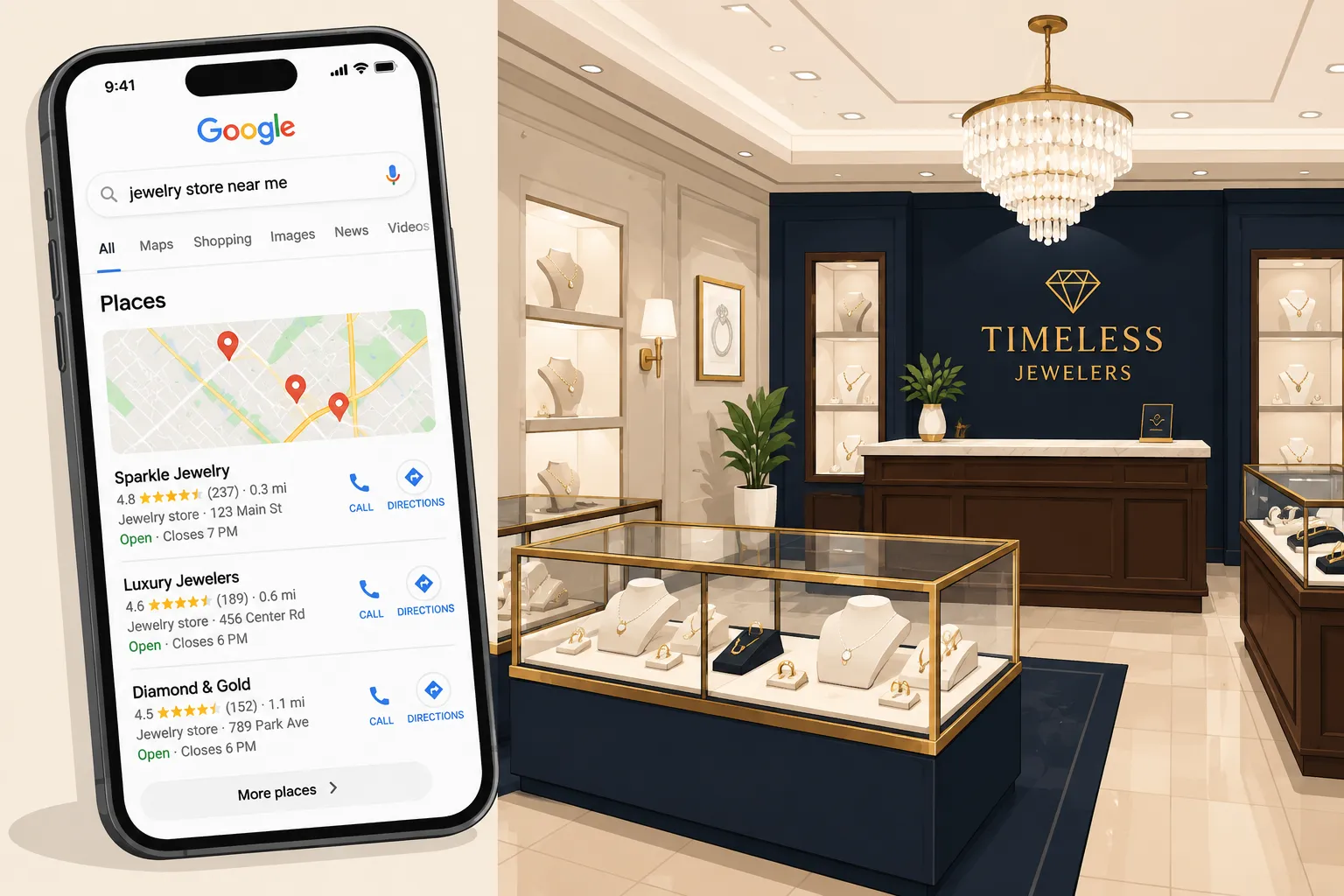
A customer searches “jewelry store near me” on their phone standing in a mall parking lot. Google shows three results in the map pack. Your store sells better pieces at a fairer price. None of that matters if you are not one of those three names.
This is the daily reality for independent jewelers. Search has replaced the yellow pages, the local paper ad, and even a lot of word of mouth. If your store does not show up when someone nearby searches for what you sell, you lose the sale before you ever get a chance to make your case.
This guide covers what actually moves a jewelry store into the local pack, ranks it for the terms buyers use, and turns that visibility into foot traffic and online orders. It is written for store owners running Shopify or WooCommerce, since the platform choice changes some of the technical execution. If you are already running paid ads, pay close attention to the sections on Quality Score and landing pages. Local SEO does not replace PPC. It makes every dollar you spend on it work harder.
Why Local SEO Matters More for Jewelry Than Most Retail
Jewelry purchases carry a trust problem that most retail categories do not. A customer buying a phone case does not need to trust the seller much. A customer buying a two carat diamond ring does.
That trust gap is why local signals carry so much weight in this category. Reviews, photos of the actual showroom, a verified address, and consistent business information across the web all tell Google and the buyer the same thing: this is a real, established store worth the risk. A jeweler with 200 reviews and a fully built out Google Business Profile beats a competitor with a flashier website and no local presence, because the buyer’s decision is emotional and financial at the same time.
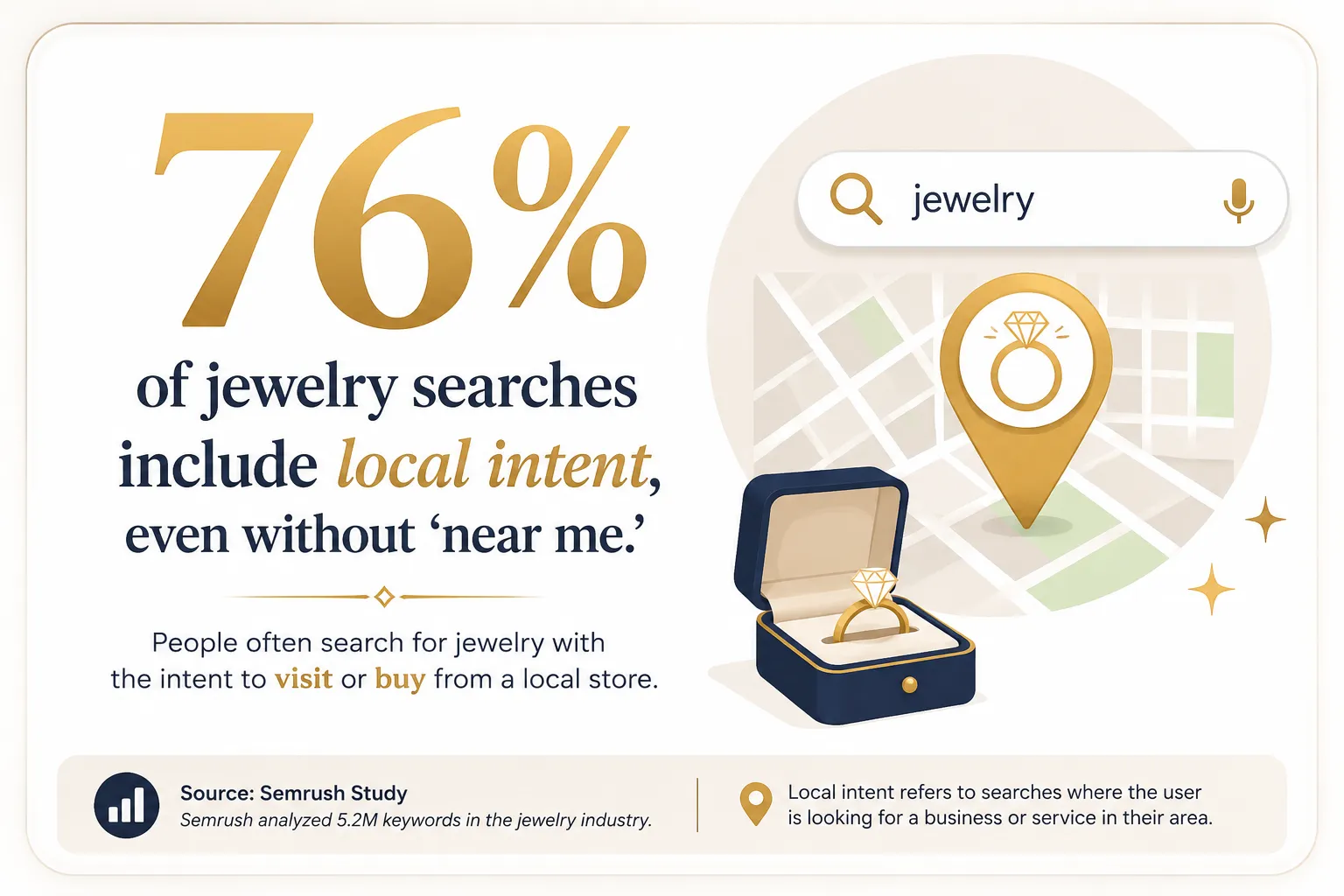
Search intent in this category also skews heavily local. Someone searching “custom engagement ring” without a location modifier is still often looking to buy locally, because they want to see the stone, try on the ring, or trust a jeweler face to face before spending thousands of dollars. Google knows this and serves local results even for searches that do not include “near me.”
Google Business Profile: The Foundation
Your Google Business Profile is the single highest leverage asset in local SEO for a jewelry store. Most owners set it up once and never touch it again. That is the gap you can close.
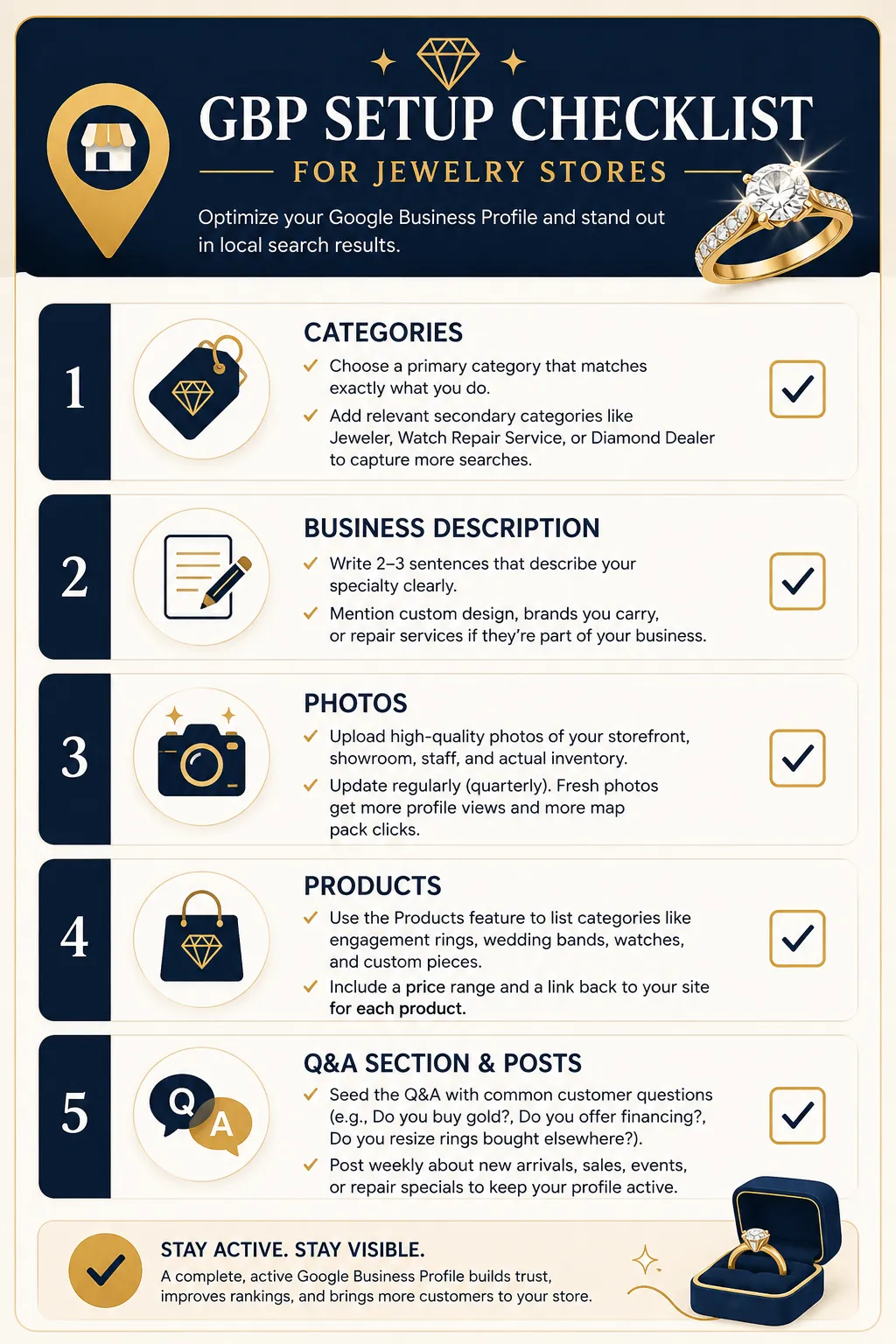
Categories. Choose a primary category that matches exactly what you do. “Jewelry Store” works for most general jewelers. If you specialize, add secondary categories like “Jeweler,” “Watch Repair Service,” or “Diamond Dealer” to capture more search variations.
Business description. Write two or three sentences that describe your specialty without keyword stuffing. Mention custom design, specific brands you carry, or repair services if those are real parts of your business.
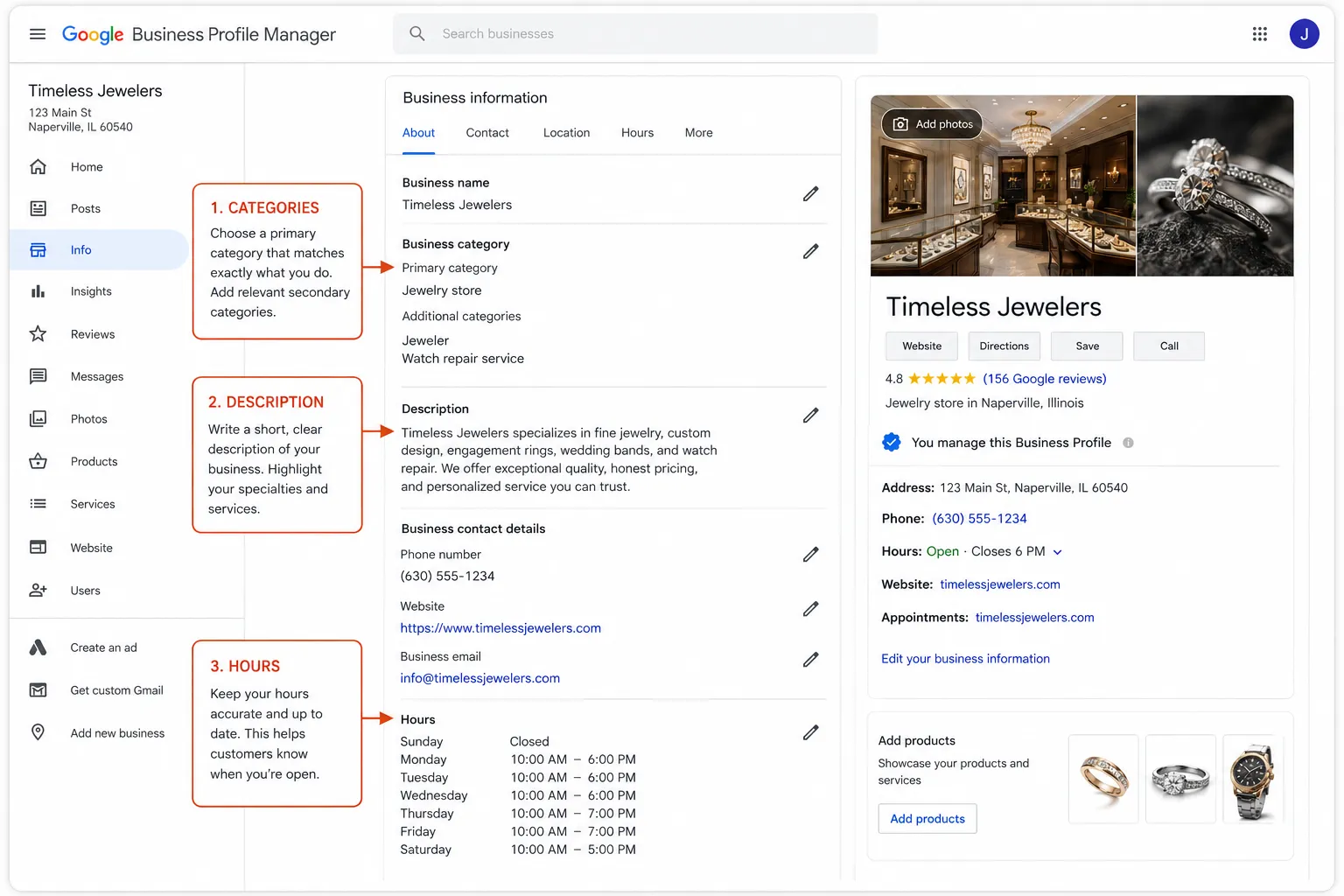
Photos. This category depends on visuals more than almost any other retail vertical. Upload high resolution photos of your storefront, showroom interior, staff, and actual inventory. Update these quarterly. Listings with fresh, frequent photo uploads get more profile views and more map pack clicks than listings with five photos from three years ago.
Products. Use the Products feature inside your profile to list categories like engagement rings, wedding bands, watches, and custom pieces. Each listing can include a price range and a link back to your site.
Posts. Weekly posts about new arrivals, sales events, or repair specials keep the profile active. Google rewards profiles that show ongoing activity with better visibility.
Q&A section. Seed this yourself with the three or four questions customers ask most: do you buy gold, do you offer financing, do you resize rings bought elsewhere. An empty Q&A section leaves room for a stranger to post inaccurate information that sits on your profile indefinitely.
Winning the Local Pack
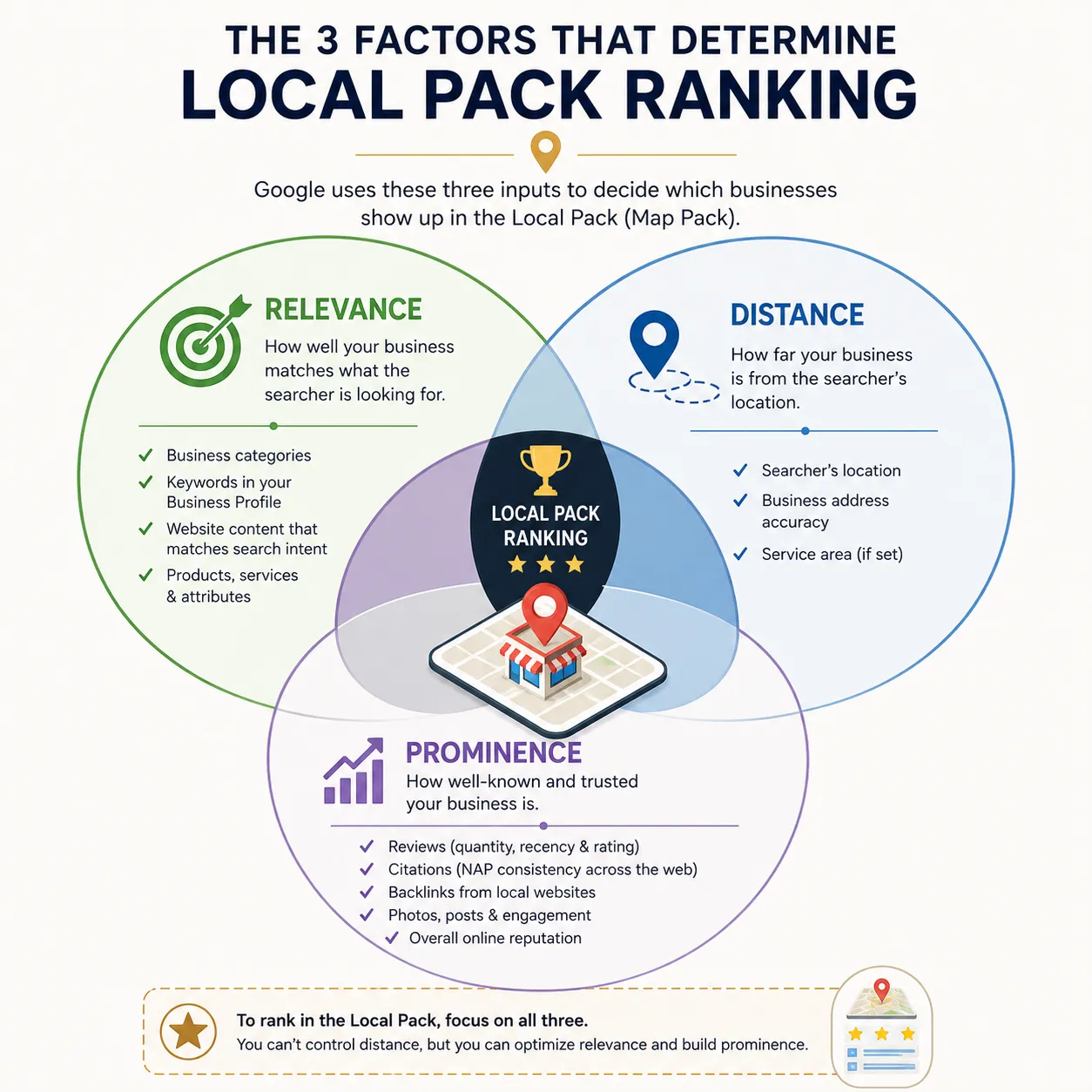
The three listings that show up above the organic results for local searches make up the map pack. Ranking there depends on three factors Google has confirmed directly: relevance, distance, and prominence.
Relevance comes from your categories, your business description, and how well your website content matches search intent. Distance is largely outside your control, though a complete and accurate address helps Google place you correctly. Prominence is where most of the work happens, and it comes from reviews, citations, and links.
Reviews. Volume matters, but recency and response rate matter just as much. A store with 150 reviews from three years ago and nothing since looks stagnant compared to a competitor adding five new reviews a month. Ask every satisfied customer for a review at the point of sale, not after the fact through an email they will ignore. Respond to every review, including negative ones, with a specific and professional reply rather than a generic template.
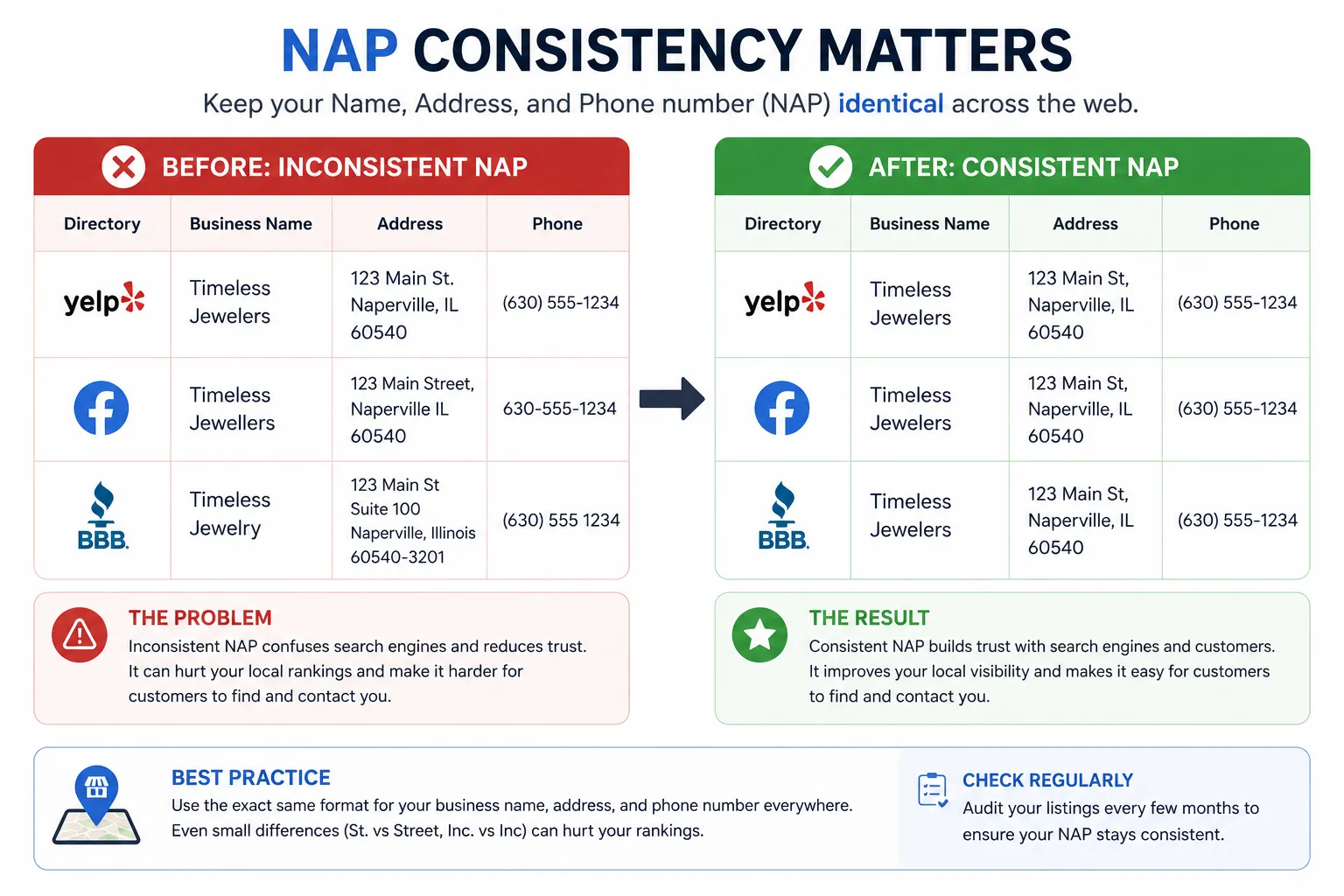
Citations. Your business name, address, and phone number need to match exactly across every directory that lists you: Yelp, Facebook, the Better Business Bureau, industry-specific directories like JCK or the Jewelers of America directory, and your own website footer. Inconsistent formatting, like “St” in one place and “Street” in another, weakens the trust signal Google uses to confirm your business is legitimate.
Local links. A link from your local chamber of commerce, a wedding vendor you partner with, or a local news feature carries more local ranking weight than a generic directory submission. If you sponsor a local event or work with wedding planners, ask for a link back to your site.
Product Schema for Jewelry Sites
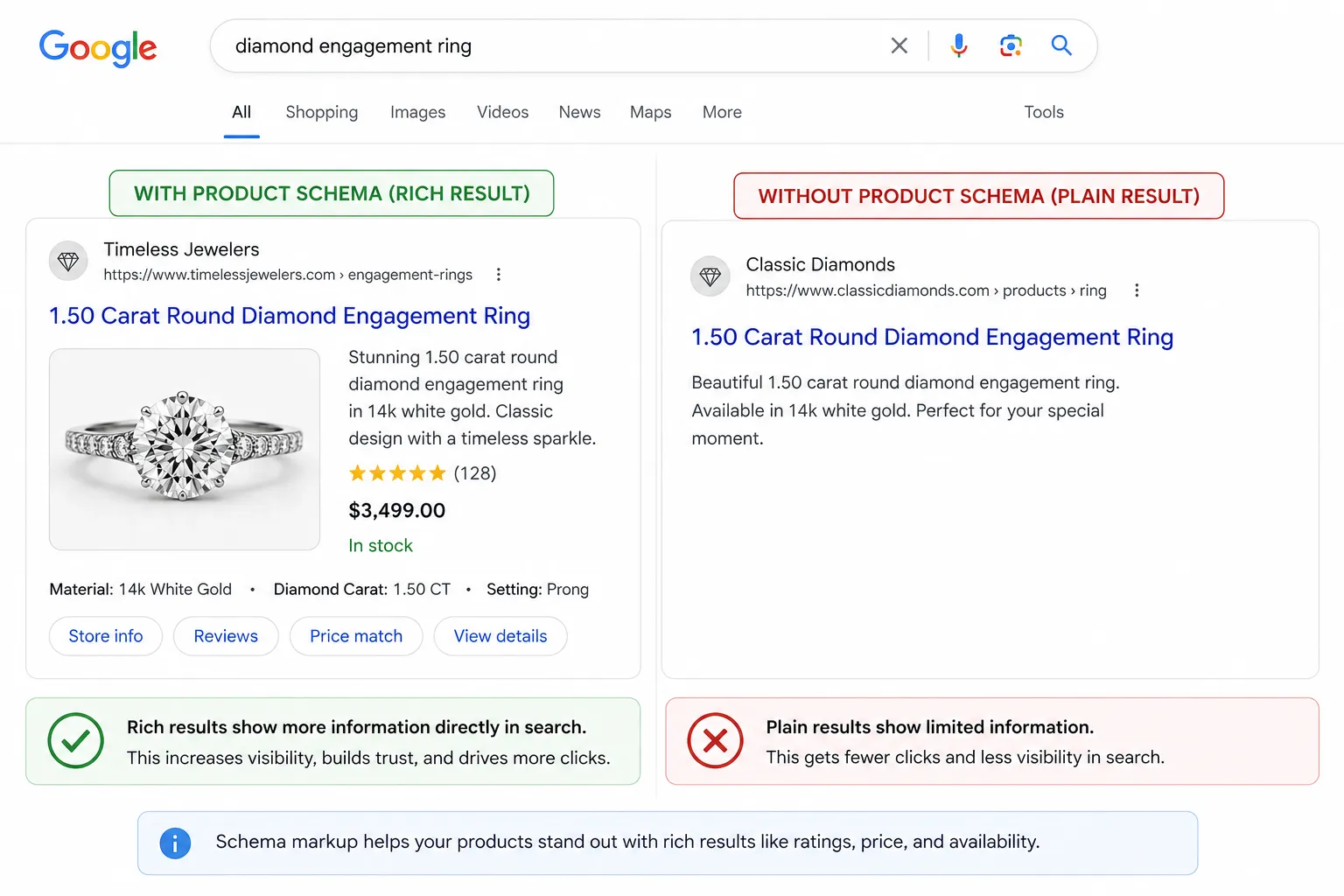
Schema markup is structured data added to your website’s code that tells search engines exactly what they are looking at. For a jewelry store, this is not optional technical polish. It directly affects whether your products show up with rich results like star ratings, price, and availability in search listings.
Use Product schema on every product page with these properties filled in accurately: name, image, description, price, currency, availability, and brand where applicable. For jewelry specifically, include material and gem properties where your platform supports them, since buyers frequently filter by metal type and stone.
Add LocalBusiness schema to your homepage and location pages with your name, address, phone number, hours, and geo coordinates. This reinforces the same NAP consistency that matters for citations and gives search engines a clean data source instead of forcing them to infer your details from page text.
If you run a physical showroom alongside your online store, use the JewelryStore schema type where supported, since it is more specific than the general LocalBusiness or Store types and signals category relevance directly.
Shopify-Specific Notes
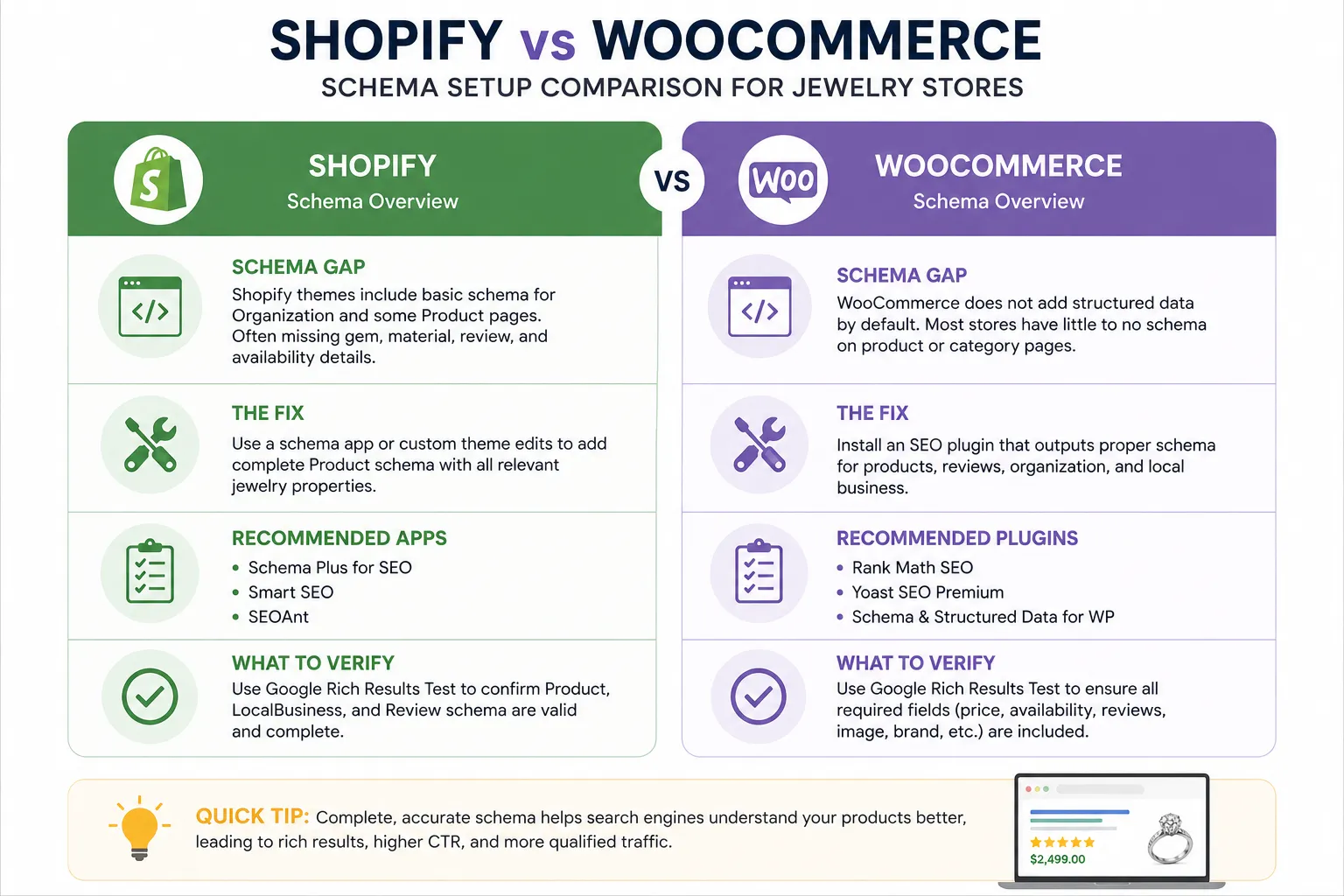
Shopify generates some schema automatically through its theme templates, but coverage varies widely by theme and often misses gem and material properties entirely. Check your current output using Google’s Rich Results Test before assuming it is handled. Many jewelry stores on Shopify need a schema app or custom theme edit to get full Product schema coverage.
WooCommerce-Specific Notes
WooCommerce sites typically need a dedicated SEO plugin to generate proper schema, since the platform does not include it natively. Whatever plugin you use, verify it outputs Product schema with price, availability, and review data, not just basic page metadata.
Review Strategy That Actually Builds Trust
Generic review requests get generic results. A text message sent two weeks after a purchase asking for “a quick review” gets ignored by most customers. The stores that build real review volume make the ask part of the sale itself.
Train staff to ask for a review at pickup or checkout, when the customer’s satisfaction is highest and the interaction is still fresh. For custom pieces or repairs, follow up when the customer picks up the finished item rather than waiting for a delivery confirmation email on an ecommerce order.
Segment your ask based on purchase type. A customer who bought an engagement ring has a different story to tell than someone who had a watch battery replaced. Prompting them with a specific question, like asking what made them choose your store for such an important purchase, produces longer and more useful reviews than a generic star rating request.
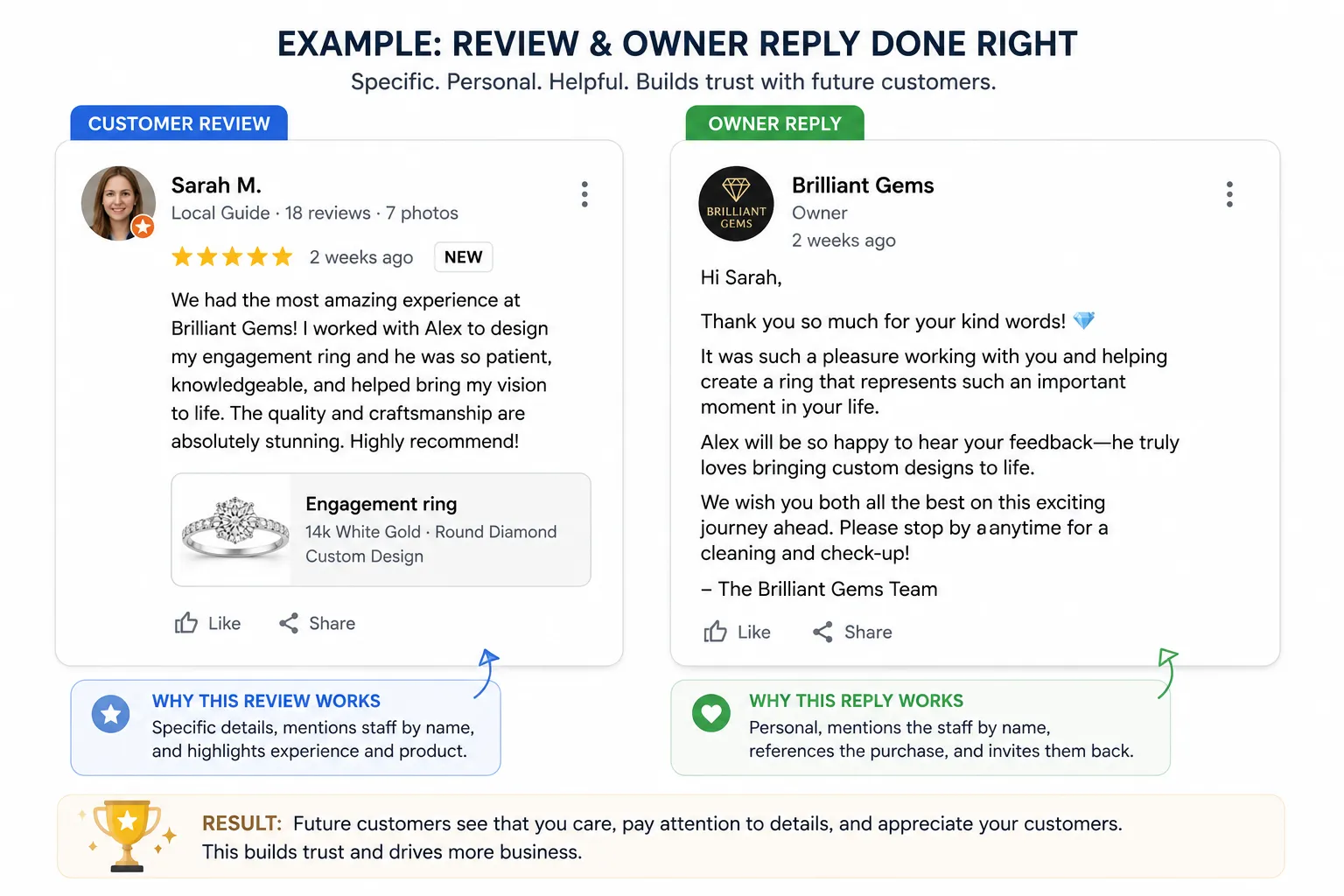
Respond to reviews within a few days, not weeks. A specific reply that references the actual purchase, such as thanking a customer by name for trusting you with their anniversary gift, shows future customers reading reviews that your store pays attention to real people rather than copying and pasting a script.
How Local SEO Improves Your Existing PPC
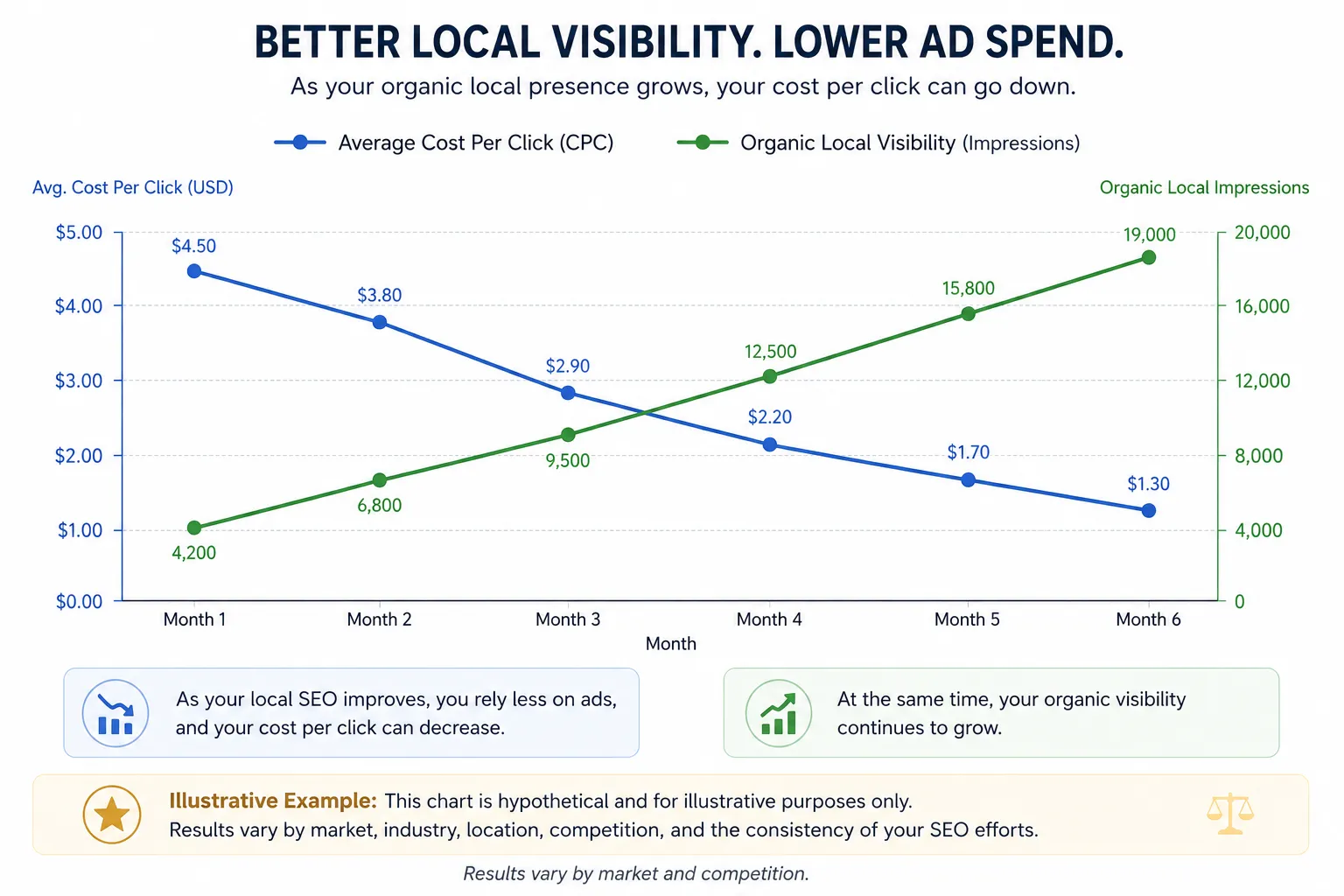
If you already run PPC campaigns for terms like “engagement rings near me” or “jewelry store [city],” local SEO work directly lowers your cost per click over time. Google’s Quality Score formula rewards landing pages that closely match search intent and load quickly. A location page built for local SEO, with your address, hours, reviews, and relevant products, gives your ads a stronger landing page score than a generic homepage.
Organic local visibility also reduces how much you need to spend on branded and near-me terms specifically. Once your store ranks organically in the map pack for your core categories, you can shift ad spend toward higher intent or higher margin terms instead of paying for clicks you would get for free with stronger organic presence.
The two channels are not competing for the same budget. They are compounding on the same trust signals: reviews, page relevance, and site speed all help both at once.
Turning Local Visibility Into Foot Traffic and Online Sales
A jewelry store with both a showroom and an ecommerce site needs local SEO to serve two different buyer paths without confusing either one. Someone searching to visit your showroom needs your hours, address, and parking information front and center. Someone searching to buy a piece online needs clear product pages, shipping details, and return policy visible without digging.
Build location pages that serve the in-person searcher directly, separate from your product catalog pages that serve the online buyer. Cross-link them naturally, so a showroom page mentions your online catalog and a product page mentions the option to view the piece in person, but do not force one experience to carry both jobs.
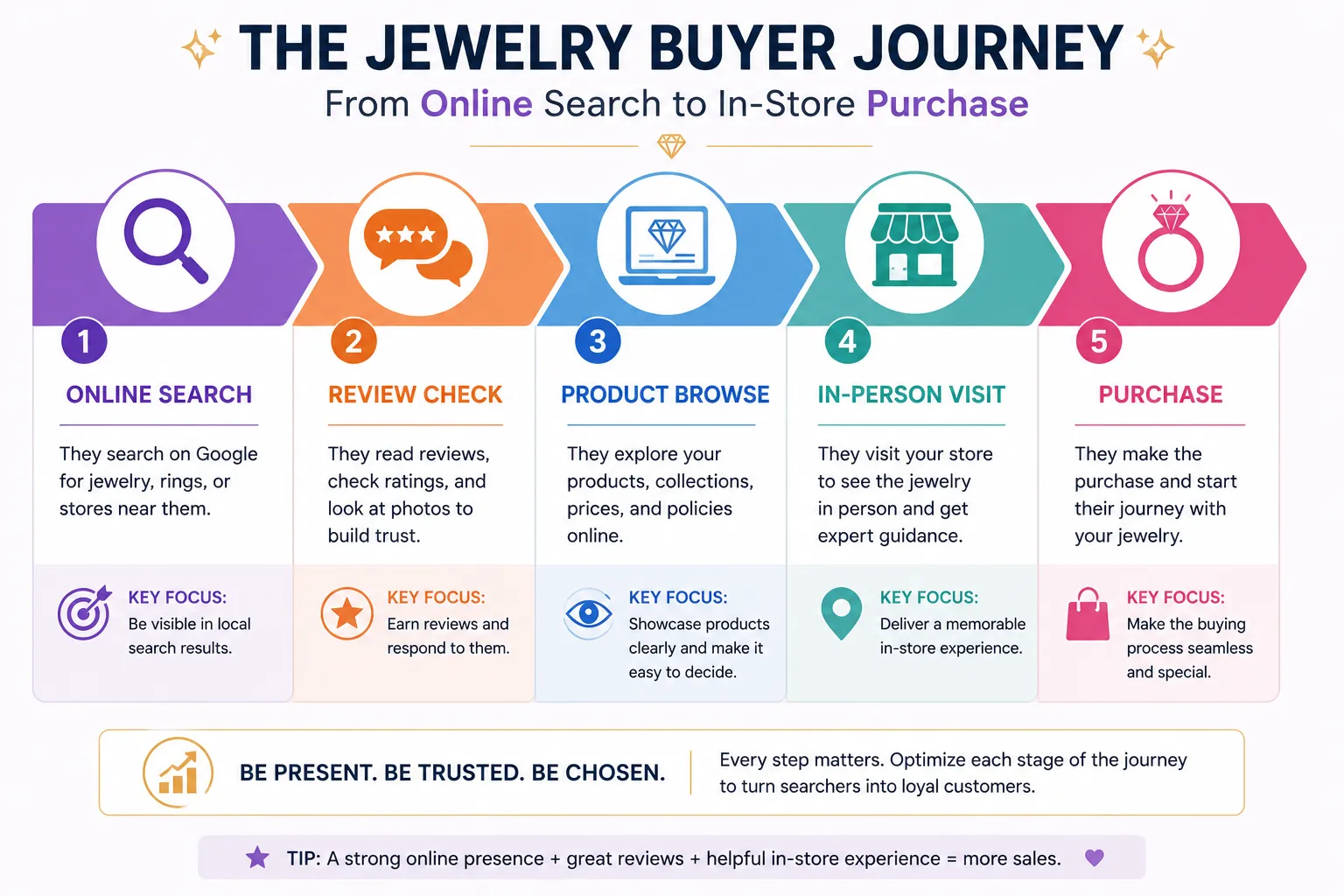
Track store visits from Google Business Profile insights alongside your ecommerce conversion data. Many jewelry buyers research online, check reviews, browse your product photos, and then visit in person to make the final decision. If you only measure online conversions, you will undercount the actual return local SEO produces for a business that sells both ways.
Where to Start
If you are working through this for the first time, start with your Google Business Profile audit, since it is the fastest win and the foundation everything else builds on. Move to citation consistency next, then schema markup, then a structured review request process. Local link building takes the longest to show results, so start those conversations early even though the payoff comes later.
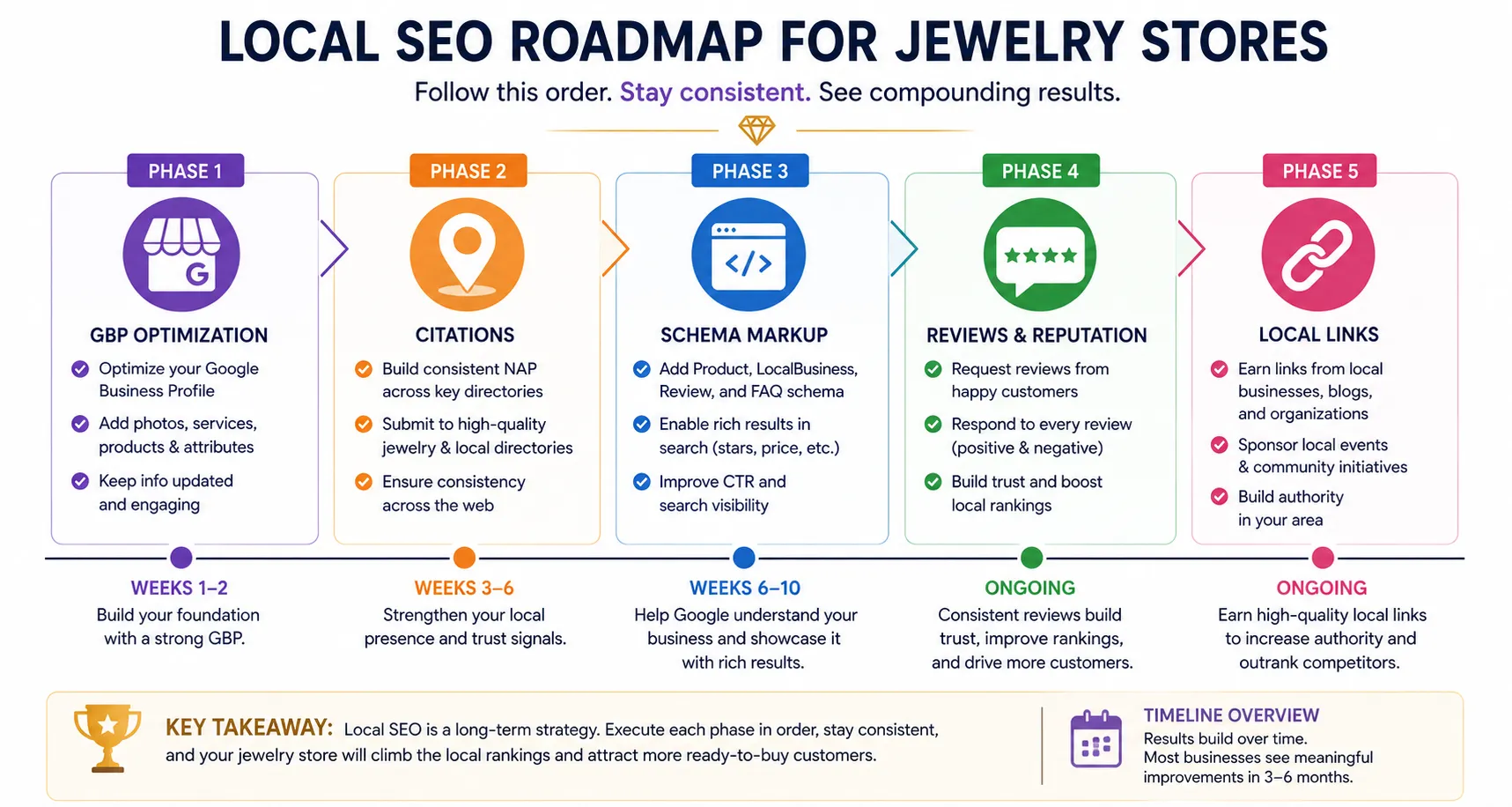
Every piece of this guide compounds over time. A jewelry store that commits to local SEO for six months will not just rank better. It will convert the PPC spend it already runs at a lower cost, build a review base that sells for it before a customer ever walks in, and turn local search into a channel that works around the clock instead of only when the ad budget is on.